
 Allie Agostino
 Iman Ahmed
 Christian Alvarez
 Brianna Barretta
 Kirah D. Cobbs
 Ryan Connelly
 Victoria Corless
 Mary DeRose
 Saira Desai
 Matthew Dietrich
 doogaho
 Dylan Kaminski
 Esmeralda Rivera
 Erin Nevin
 Anthony Bolton
 fourriea
 Jecce H
 jaredkeane
 Sarah Kropinack
 Laura Leonel
 Kayla Lavecchia
 liptack2gostocktonedu
 mary ceceilia
 Matt Cavallo
 Eli Mitros
 Elizabeth Myers
 Tyler Nicosia
 CHARLES OBIRINANWA
 Kollisa Pimentel
 Vincent Rapallo
 Shakila Riaz
 Tori Robbins
 Diamond Rogers
 Kamelea Saitova
 sarahcipkins
 The Argo
 suzannaccook
 Amanda Tague
 Jaedyn Thomson
 Danna Urias
 Breanna Vanaman
 Jennifer Vaneman
 victoriaorlow
 yoneluna
 Zuleika Rodriguez
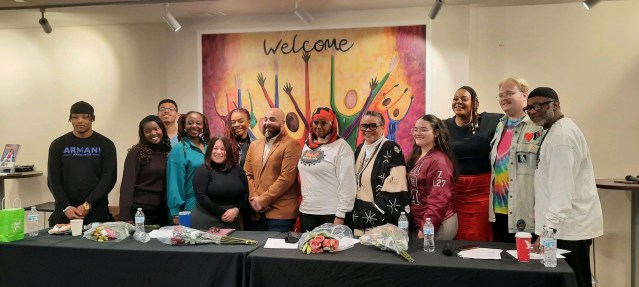
On Tuesday, March 24, as Women’s History Month concluded, the Multicultural Center and Stockton’s Women’s History Committee hosted the Women’s Resilience and Empowerment panel, “Stories Beyond Walls,” with support from Lambda Theta Alpha Latin Sorority and Los Latinos Unidos.
The event featured members of Women Beyond Borders and offered an in-depth, grounded and heartfelt discussion on finding resilience, building identity and creating community during and after hardships faced by marginalized people.
The event was a collaboration between Stockton University staff and the nonprofit organization, which is dedicated to empowering systemically oppressed individuals and those experiencing inequities by providing harm-reduction practices and crisis intervention during hardships such as emergency housing, food insecurity and post-incarceration rehabilitation for women in Philadelphia.
The Multicultural Center opened at 4 P.M for Stockton Galloway students to enjoy hot food and connect in an atmosphere of inclusivity and familiarity. At 4:30 p.m., the panel began. The five women present were Sappho Fulton, CEO of Women Behind Borders; Dr. Victoria Best, founder of Victoria Urban Outreach Tutoring Service; Assata M. Thomas, executive director of the Office of Reentry Partnerships for the City of Philadelphia; Desiree Riley, author of Felony to Freedom and co-author of Breaking Chains as well as founder of the Mastermind Cooperative; and, arriving shortly after, Movita Johnson Harwell, founder of the CHARLES Foundation (Creating Healthy Alternatives Results in Less Emotional Suffering).
A major theme within the panel was the adversity women of color face within the criminal justice system—whether it be the foster care systems’ failure to protect children and its barriers to college education, to separation of parents from their children behind bars, and the lack of protections on black lives when it comes to gun violence.
By sharing these real-world struggles and institutional imbalances, the panelists opened a conversation about what it means to overcome adversity. “Just like healing, I think it’s never a destination,” Sappho Fulton said. “We’re still trying to rise to the highest iteration of ourselves…We’re evolving every day, arriving and shedding the weight, whatever that is and how it turns up. We reserve the right to change our mind, and I think that’s what it means to be actively progressive.”
Movita Harwell shared her own healing journey and finding her empowerment. “For a long time, with everything that happened through my childhood and through my teen years, I wanted to be invisible…Because I carried so much pain, so much trauma, I just didn’t want to be seen because I thought being seen meant I was being made a target…I think going through those trials and tribulations, I was able to get to the root of who I was, to be able to appreciate who I am as a person because my identity is connected to others.”
“I receive so much joy speaking to groups and individuals because I feel like everything I have been through has been to help somebody else overcome something they need to go through,” Harwell added. “It gives me joy to be able to share those experiences to help people know they can survive whatever they’re going through as well.”
The panel then moved into a question-and-answer segment, where the audience asked thoughtful and introspective questions about pursuing leadership in the face of adversity. Student Jack Bizga asked, “What are your experiences during growth in turning all these emotions into prosocial action, where you create organizations and impact communities? What are your experiences turning these emotions into pro-action?”
Assata M. Thomas answered with conviction: “How I use my emotions is by understanding that emotions are feelings that can change, and they do change daily. What I can do is harness those emotions and make sure I am operating from a place of strategy, not just emotion. My emotions make up who I am, but I have to put them aside, and that’s when I turn to my calling and to a trusted mentor to say, ‘This is what needs to be done.’ It comes back to the community: ‘Who is my community? Who are my trusted people in leadership with whom I can have transparent conversations?’ …So I can say, ‘Listen, this is what I’m facing, and this is how I’m feeling emotionally over it. …What do I need to do to get the ball moving forward?’ And I would say I advance it with the emotion of anger. That singularly pushes the work forward.”
Building on that answer, Victoria Best added, “I was functioning off of anger, and anger got me incarcerated. But then, like Assata said, it became a passionable anger, so it was no longer trying to get people out of my way, but now it’s intentional, and I’m inspired, and I want to be reaching my climax because my purpose here needs to be reached so it’s about ‘How can I challenge those emotions to get me where I need to be?’ As I am getting older, I am reluctant to hold onto emotions that aren’t going to get me somewhere right.”
After the panel ended, Jack Bizga elaborated on how the speakers’ answers highlighted the impact of strong leaders in empowering communities and sharing their wisdom and experiences. “The response to my question on prosocial emotions and the use of anger was invaluable,” Bizga said. “I knew that if you ask incarcerated women how they grew emotionally, it would invariably include a prosocial answer. Anger, in general, I think, is a very good motivator for engaging in politics and taking direct action to change your community.”
Categories: Campus Life




 stocktonargo.com