
 Allie Agostino
 Iman Ahmed
 Christian Alvarez
 Brianna Barretta
 Kirah D. Cobbs
 Ryan Connelly
 Victoria Corless
 Mary DeRose
 Saira Desai
 Matthew Dietrich
 doogaho
 Dylan Kaminski
 Esmeralda Rivera
 Erin Nevin
 Anthony Bolton
 fourriea
 Jecce H
 jaredkeane
 Sarah Kropinack
 Laura Leonel
 Kayla Lavecchia
 liptack2gostocktonedu
 mary ceceilia
 Matt Cavallo
 Eli Mitros
 Elizabeth Myers
 Tyler Nicosia
 CHARLES OBIRINANWA
 Kollisa Pimentel
 Vincent Rapallo
 Shakila Riaz
 Tori Robbins
 Diamond Rogers
 Kamelea Saitova
 sarahcipkins
 The Argo
 suzannaccook
 Amanda Tague
 Jaedyn Thomson
 Danna Urias
 Breanna Vanaman
 Jennifer Vaneman
 victoriaorlow
 yoneluna
 Zuleika Rodriguez
Stockton’s Fall 2025 term is in full swing, with the biggest change of the semester being Stockton’s meal system. It has been a highly controversial change, unpopular for Stockton students and parents alike, leaving the former stressed over their nutrition and already-low finances as their college loans pile up.
There are new kiosks available at all food locations for students to “skip the line” and the new partnership with the Boost Mobile App allows for ordering in advance. Along with this, Stockton has done a complete overhaul for the meal system, introducing new meal plans and requirements.
The Ultimate 19 and Fab 14 weekly meal plans have been completely discarded, replaced with four different options, according to the Meal Plan tab of Stockton’s website: 21 Weekly, 16 Weekly, Osprey Eats, and Osprey Social. The most expensive option is the 21 Weekly Plan, which is 21 swipes a week and $250 Flex, topping off at $2,890 per semester. The cheapest option is the Osprey Social, or 5 swipes a week and $200 Flex, at $990 per semester.
All previous Block Plans have also been replaced with only two options: the Osprey 35 Block and the Osprey 100 Block. There are also two commuter meal plans, the Osprey on the GO and the Osprey Connect. On a Facebook Webinar offered by the Stockton University Family Engagement page, a representative of Stockton’s Dining Services said, “We have changed [the residential students’ plans] over the last couple semesters, just trying to see what works and what benefits the students the most.”
From the start, most students and parents were not happy with the changes. In previous years, Housings 1 and 4 did not require meal plans thanks to the presence of a full kitchen, complete with a stove. This year, according to the Housing tab on the school’s website, all housing options on both Galloway and Atlantic City campuses require meal plans, which are automatically added to a student’s bill by default. A student in their second year and above at Stockton may opt out of the meal plan if they live in Housings 1 or 4, but first-year and transfer students, including commuters, are obligated to take a plan for the entire school year.
The meal plans activated on August 29, the first day to move in new students, but students and parents alike were extremely dissatisfied by the available dining options during Welcome Week on Aug 29-Sep 3. Likewise, all dining options were closed prior to those dates, despite some returning students having lived on campus since August 22.
On a private Facebook group for Stockton parents, many were commenting on how lackluster the dining options were and how they found themselves shopping for off-campus options instead of using the meal plan they were forced to pay for. One user, a parent of a first-year student, commented, “Not much of a welcome week when half the places are closed or have very limited hours.” A user with a student living on the Atlantic City campus said, “Gotta love this—my daughter moved into AC on the 23rd—no food places open at all until the 29th.”
One parent re-posted the answers to Frequently Asked Questions posted by Stockton Dining and asked, “Why are commuter students now required to purchase a meal plan? If they do not live on campus and eat all their meals at home, why are they required to purchase a plan they will not use?”
The Weekly Meal Plans are the most controversial plans of the semester so far. While previously, students could use their swipes anywhere on campus for any meal: this year, students are restricted. The weekly plans now operate on a Meal Equivalency program. Every plan offers a certain amount of “Board Swipes” and “Equivalency Swipes”: the most expensive plan, 21 Weekly, offers two equivalencies while the others offer only one. Students can use board swipes at either Breakfast and Co. or N-Wing, but can only use one to two equivalency swipes a day at any other location.
Hunter Pico, Vice President of Student Senate, had strong opinions on the changes: “We have tried to establish relationships with Chartwells and Stockton Dining in general. When we were informed of last Spring’s pilot program, we told them it was not going to fly over well with the students. They didn’t take into account our feedback. Then, we found out through Instagram about this Fall’s plans. We were supposed to be informed of decisions that impact students and argue on behalf of them. Our input wasn’t requested and our team wasn’t notified. All these changes came quite literally out of nowhere.”
Some students had originally paid for the old meal plans such as the Ultimate 19 or Fab 14 Weekly Plans and were confused when they saw the changes reflect on their Bursar bill at the last minute.
“During our training, we invited members of Chartwells and Dining to meet and talk with them,” Pico stated. “I was very assertive to the admin regarding that students had already paid their bills and [Stockton] didn’t tell them about the changes until after the bills were paid. People didn’t even know what they were paying for.”
He was also outraged at the reasoning behind mandatory meal plans. “[They’re] making us pay $7,000 for tuition, and they’re telling us ‘how to budget’?”
Edwin Feria-Serna, the Public Relations’ Chairperson for Student Senate, felt that there was a severe miscommunication between Chartwells and Senate, leaving the board misinformed on the system and the students’ voices unheard.
“Chartwells has been moving independently,” Feria-Serna stated. “We weren’t even informed to let the students know about these changes and we’re trying to adapt as we go, but we didn’t even know, [for instance], what Board Swipes were.”
The pushback from students was so significant that Senate’s discussion with Chartwells successfully extended the no-fee meal plan change request deadline to September 12th.
Another change resulted in N-Wing no longer offering breakfast, leaving Breakfast and Co., Dunkin’, and Einstein Bros. as the three breakfast locations on Galloway’s campus.
Stockton Dining said in their answers to FAQs: “Student use of weekday breakfast at the Nest was very low. This led to significant food waste and higher costs. To better balance efficiency with student meals, The Nest serves weekend brunch from 10 a.m. to 2 p.m.”
Pico also feels that deciding to close N-Wing breakfast altogether was not a wise decision. “If they had left [N-Wing] open, we don’t know if more students would’ve gone to have breakfast there. Board Swipes can be used at N-Wing, but now we only have Breakfast and Co. as an option.” He pointed out that “N-Wing is a 20 min walk. I proposed to [Dining] to let us use Board Swipes at the Lodge and maybe have breakfast sandwiches. [Chartwells’] reasoning is to promote a healthier lifestyle. If we’re paying $2,000 for a meal plan, we should use it however we want.”
In Atlantic City, Southside Bistro offers breakfast, lunch, and dinner while the other two locations, 500 Degrees and AC Street Subs and Salads, offer lunch and dinner during weekdays. Pico informed The Argo that Board Swipes are not valid in any Atlantic City locations, leaving residents with no choice but to travel all the way to Galloway Campus to use their Board swipes. He added, “Not everyone eats breakfast or gets up at certain times. The restrictions on these Board swipes are unnecessary.”
The Block and Commuter Meal Swipes, unlike the Weekly Plans, can be used at all locations and are not restricted at all. However, first-year students living at Stockton are obligated to choose a Weekly Plan, while first-year commuter students can choose a Block Plan.
On the webinar, the Stockton Dining representative commented, “Putting first-year students on the Weekly Plans really helps them budget and learn their spending habits that first year.”
Candace Mitchell, Director of Student Transition Programs, added, “The first and second semester, we like to have them on the Weekly Plans so they can learn their budgeting, see how many [swipes] they have left over at the end of every week or if they’re burning through them so they have a better understanding of what they’re spending.”
The new kiosks, which at first brought some excitement, brought confusion and disappointment, with many options and ingredients missing from the menus. For example, when ordering a salad from Create Salad, the kiosk is missing some of the offered ingredients, while also forcing customers to add a protein to the recipe, regardless of preference. The kiosk also wasn’t inclusive to any potential vegan or vegetarian diets. In previous years, students could simply tell the employees what they wanted in their salad and fit the salad into one meal swipe.
In regards to alternative or special diets, a concerned parent posted on the Facebook page, “My daughter, who is supposed to be gluten-free, was waiting in line for over 20 minutes for a smoothie. The line wasn’t moving, so she gave up and grabbed a pizza, and was late for her next class. She is going to feel the gluten later.”
On the webinar, the hosts stated that concerns about food allergies or diets may be brought up to Stockton Cares, The Wellness Center, the Office of Residential Life, and/or Campus Dining and Nutritionists.
Pico, in reference to the kiosks, “told the administration about different ADA issues. For example, in Einstein Bros., the crowd was so thick that wheelchair users couldn’t get through. [Dining] issued an email saying ADA changes are being implemented.” Pico was upset at the fact that ADA issues weren’t considered in the first place.
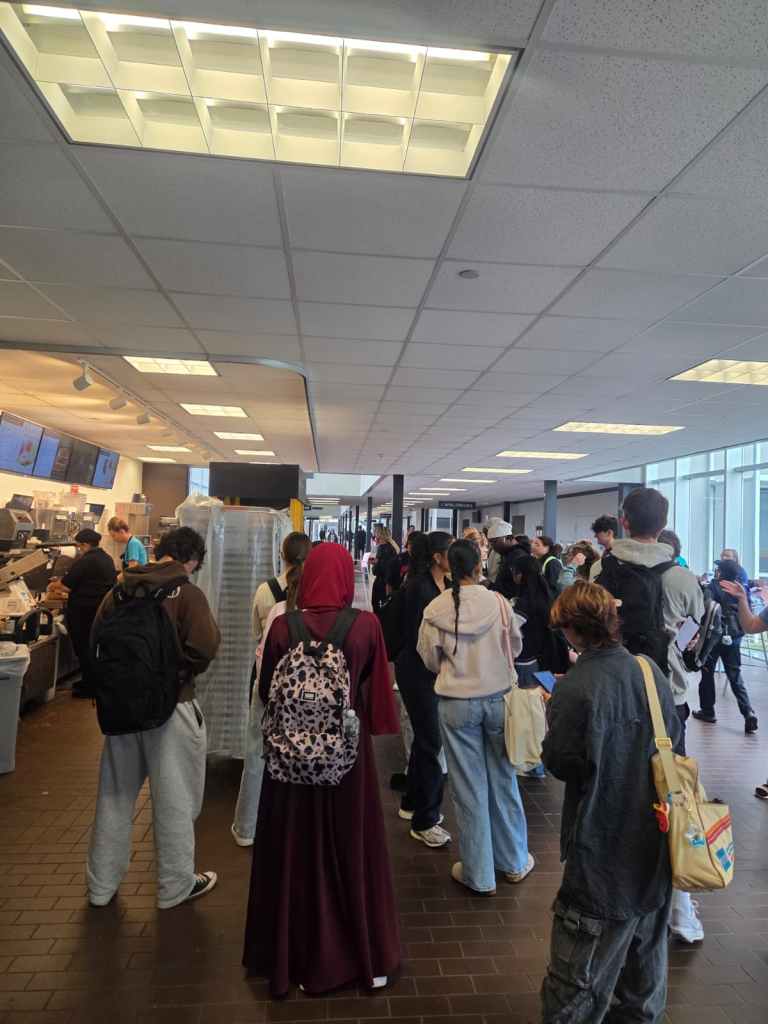
The Boost App was heavily advertised by Stockton Dining as a solution to the usually-long lines at the Campus Center Food Court. On one of their promotional Instagram reels, the caption read: “Boost Mobile is here to [make] your dining experience even better!” In the reel, the representative of Boost said, “Welcome the new mobile ordering solution on campus- Boost! You can pre-order your meals and pick-up on your schedule at nine different locations.”
Another reel shared on September 4th said, “Hate waiting in lines at the Campus Center? Now you can skip the lines with Boost ordering– and that includes Chick-Fil-A, which I know gets super long lines, so make sure to download the app and get your food faster!”
However, the Boost app instantly gave students problems, with many students missing meal swipes on their account, or not receiving any swipes on the app whatsoever. It also has contributed to very long wait times, longer than they used to be in recent years.
At Chick-Fil-A on the evening of Monday, September 9, students were waiting for their food up to 55 minutes, even after using both the kiosks and the Boost app. Employees were also mixing up orders, forgetting fries or drinks in combo orders, indicating that they were likely overwhelmed with work. Many students arrived late to classes or even skipped them altogether while waiting for their food.
Pico stated, “When I was talking with the higher administration offices, informing them of these [changes], they had no idea. The looks on their faces were appalling. It came as a shock to me how much miscommunication there is in the administration (highest officials) and their inner workings. [Chartwells] has not communicated the way they’re supposed to regarding any change.” He added, “It’s hard when we have about 9,000 constituents knocking on our door, saying, ‘What are you doing? What is Senate doing?’ The administration has apologized to us [Senate], but I would personally like to see an apology to students and parents. It’s not right that they are not included in these conversations. These higher officials’ responses were along the lines of, ‘we had no idea, this is unacceptable, these changes should’ve gone through proper channels, we apologize for the miscommunication, this shouldn’t be happening’.” He also informed, “Members of senior staff and the Deans’ offices were explaining things to the Senate that weren’t really true. I had to cut them off because they weren’t explaining Board swipes correctly.”
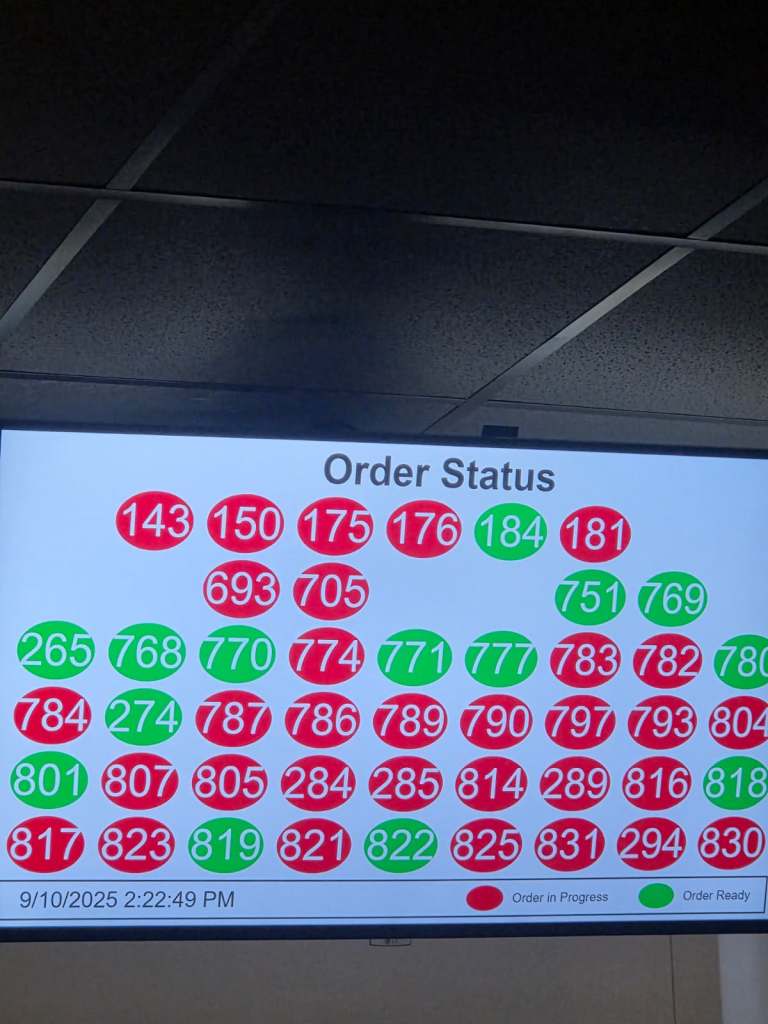
Students have found the changes more confusing than anything, bringing frustration to those with meal plans. Sarah Goodrich, a senior, expressed, “It just doesn’t make sense for what’s ‘equivalent’ and what’s not. At the Lodge, for example, you can only get three things. Last year, you could get anything with a meal swipe. […] In the Campus Center, the screens aren’t horrible, but at Chick-Fil-A yesterday [September 5th], my boyfriend and I waited thirty minutes for a sandwich.”
Grace Hatzel, a junior, said, “From changing our swipes last semester to adding this, it’s just so confusing. No one understands what it is.”
Two senior students who preferred to remain anonymous had more mixed opinions on the new system. One said, “The Boost app would be nice if it were faster, I guess. The whole new thing with the meal swipes and equivalency doesn’t make sense. Three years ago before the first change was better. It’s better to go back to that than what we have now.” The other added, “We could use the meal swipes for anything before. It is nice that you can mobile order ahead, though.” Unlike most opinions, the seniors thought last Spring’s meal plan of an entree, side, and drink was worse than the current plan.
A Junior student living on campus, preferring to remain anonymous, stated while waiting for food at the Lodge, “I’m not a big fan of [the meal plans]. I feel like it’s a little overwhelming and confusing; it’s just hard for me to understand. I definitely feel like I’m overspending, because they force [me] to buy stuff that I don’t really eat, or that I don’t need—just extra. I don’t want it to be wasted.”
On the morning of Saturday, September 7 in the morning, one student ordered an egg and cheese bagel and a donut through the Boost app, skipping the drink since it would exceed the Equivalency value. They waited 40 minutes for the order, which was also mixed up, since bacon was added even though they requested it without meat. On the Google Play Store, Boost has a 1.7-star rating out of 513 user ratings and reviews. The previously-used app, GET Mobile, has a 4.5-star rating out of nearly 3,000 user ratings and reviews.
Pico was very concerned about the employees adapting to these changes and the influx of orders: “Chartwells did not think about the workers. Some of the workers there were not trained until the first day campus opened because of their union contract. The high student administration has said it’s unacceptable. The kiosks did not account for the amount of orders they would receive; they have to go in queue order, and that’s why it’s taking so long. They cut back on a lot of dining staff, so there’s not enough staff to take in that influx of orders.”
He reported that he saw some of Stockton Dining’s famous faces, like Cheesesteak Mike, taking shifts at eateries they normally didn’t frequent before, bringing more stress to them and other employees, since they have to walk to all ends of campus to fulfill shifts and help fellow employees.
Under their FAQs, Stockton Dining claimed: “No employees were laid off. Some Chartwells associates have moved into new roles under the collective bargaining agreement.”
Pico also pointed out the “automated” feel of the new dining operations and the lack of human interaction: “Saying ‘I don’t want something’ directly would be better.” He also acknowledged how students have historically developed close relationships with dining staff, and how the kiosks and apps are taking that element away from new students who will likely not connect to dining staff the way upperclassmen have. “We have people we are excited to see, we have our favorites, but now, we’re not like that anymore.”
A parent of a sophomore student living in Housing 5, preferring anonymity, commented, “As a parent, I’m frustrated with Stockton University’s new food plan. We’re paying more while our students get fewer healthy options—even water has been eliminated as a basic choice. On top of that, there are fewer overall choices and fewer dining locations open. Instead, students are left with over priced unhealthy alternatives. This isn’t value, and it certainly isn’t supporting student well-being.”
A lot of students are looking to change, downgrade, or even cancel their meal plan due to the changes, unfortunately needing to pay the fee for the change as classes have already started. Many were uninformed that the Boost App was completely replacing the GET Mobile App, previously used by the institution to track meal swipes and cash, and were confused by the conflicting information on both applications.
“We have Dine on Campus that shows menus and hours of operation. We have GET Mobile that shows funds. Boost allows you to order. Stockton Dining’s website revamped recently. We have four channels of info, and some info contradicts each other. There should be a centralized platform for dining information,” said Pico.
Feria-Serna added, “I’ve had a meal plan before and it was so much better in the past. I feel that students were not considered in the decision at all. It felt like some students didn’t even know and they picked the meal plan thinking that [it was like before].” In regards to the Boost app and the kiosks, he stated, “It puts the students at a disadvantage because there’s longer wait times and a lot more stress on all staff, especially the food workers. There’s less of a human interaction with workers. […] Students shouldn’t be waiting over thirty minutes for a drink or food, especially when they have back-to-back classes and they can’t eat.”
One parent commented, “I wish they had kept last spring’s concept of a meal, side, and drink as a meal equivalency instead of going to a set dollar amount. My kid got a burger yesterday and 19 cents had to come from her Flex. The meal equivalency amount should at least cover an entree and drink. But she’s realizing she gets more for her buck just going to the Food Hall, and I think that’s what the school is [pushing for].”
In response to the Grab-n-Go option being removed at Chick-Fil-A, Stockton Dining clarified under their FAQs stated: “This is a corporate requirement from Chick-Fil-A. Stockton needs to comply in order to keep our Chick-Fil-A location.”
However, on September 12, the Office of the Vice President for Student Affairs sent out a school-wide email announcing that Chick-Fil-A would return to the former model, citing: “You spoke, and we listened: effective Monday September 15, Chick-fil-A will return to the self-service/grab-n-go model, which will remain in place through Spring 2026.” They also gave tips on how to combine meals, like waffle fries and pizza or a sandwich and bottled soda.
A popular post on the page said, “We will be paying more [money] for subpar food and housing—rate increases were voted for in FY26. Demand the Board [of Trustees] to vacate their decision to increase our bills as you go about raising your Food Services/meal plan issues.” Under the post were screenshots of the June 26th, 2025 Board of Trustees virtual Meeting Minutes, which detailed the “unanimous” vote to bring about these changes.
Another post similarly read, “Demand in writing that your concerns be put on the agenda for the Board of Trustees’ next meeting, September 10th,” followed by screenshots of the Board of Trustees page at stockton.edu detailing the 2025-26 school year’s public BOT meetings.
Pico stated, “It’s like [Chartwells] is taking bits and pieces of parents’ feedback that sounds good to them out of context and using that to justify these changes.” In regards to the Board of Trustees meeting, he said, “There was a lot of contradicting info presented to the Senators and the student representative. We did not know of prior talks; our representative had no idea they approached different admins during that meeting. It seemed like they slipped it through the cracks at the last moment.”
He feels that Chartwells is upcharging students, since many toppings, drinks, and sides have an extra fee applied to them instead of being fit into one swipe. “It’s a cash grab,” he stated. “Students have said it, Senate has said it, and we’ve expressed this to administration.”
Feria-Serna also feels that the new system overcharges students. “I feel like Chartwells is forcing students to eat McDonald’s or more fast food [off-campus] because it’s cheaper compared to having their own cooked meals on campus. […] An example would be Sono; [students are] being upcharged for selecting more than one topping. I feel that it’s wrong because what if students want more than four toppings? Students are being limited on how to eat and it feels like a lot of micro-control.”
Pico informed The Argo of the official reason for the changes: “Years ago we were still receiving COVID relief funds, and those funds allowed the University to have meal equivalencies at 8.50 per swipe. Since the State stopped, we have been in a constant battle to stay above the deficit. We still haven’t broken even with Chartwells. The goal they advocate for, at least, is: ‘we’re not trying to make money, we’re trying to break even’. I asked them if last Spring’s program got us out [of the deficit], and they said no.”
He then stated, “Chartwells’ vision is going in the right direction, but the implementation was extremely careless. Why didn’t they pilot this over the summer and have proper training?” He also suggested that Dining have an informative newsletter frequently sent to students, faculty, and staff, similar to the Fraternity and Sorority Life Newsletter or the bulletins from the Career office, Wellness Center, and other departments on campus.
Pico also touched upon other planned changes for dining, one of which is quite positive: “We’re planning for Dunkin’ to have upgrades; hopefully by the Spring, they will be equipped with more drink machines to be able to make three drinks at once and be more efficient.” He also mentioned a planned remodeling of Chick-Fil-A, which will give them the opportunity to sell the full Chick-Fil-A menu, but it will possibly remove some of the other restaurants in the Campus Center Food Court.
The Office of the VP for Student Affairs further confirmed these plans through the September 12 email, announcing, “Dunkin’ Refresh—Winter Break 2025; Updated equipment and ergonomic improvements are on the way” and “Chick-fil-A Remodel— Summer 2026; Chick-fil-A will undergo a complete transformation to become a full-service location with expanded menu options—launching Fall 2026!”
Pico concluded with: “I’m advocating for the students’ best interest and telling them what they need to do. In the end, they’re the ones that elected me and I have a duty to serve them. I’m just trying to fight for them.”
The next Board of Trustees meeting will take place on December 3, 2025 in the Board of Trustees Room.
Categories: Your Voice




 stocktonargo.com