
 Allie Agostino
 Iman Ahmed
 Christian Alvarez
 Brianna Barretta
 Kirah D. Cobbs
 Ryan Connelly
 Victoria Corless
 Mary DeRose
 Saira Desai
 Matthew Dietrich
 doogaho
 Dylan Kaminski
 Esmeralda Rivera
 Erin Nevin
 Anthony Bolton
 fourriea
 Jecce H
 jaredkeane
 Sarah Kropinack
 Laura Leonel
 Kayla Lavecchia
 liptack2gostocktonedu
 mary ceceilia
 Matt Cavallo
 Eli Mitros
 Elizabeth Myers
 Tyler Nicosia
 CHARLES OBIRINANWA
 Kollisa Pimentel
 Vincent Rapallo
 Shakila Riaz
 Tori Robbins
 Diamond Rogers
 Kamelea Saitova
 sarahcipkins
 The Argo
 suzannaccook
 Amanda Tague
 Jaedyn Thomson
 Danna Urias
 Breanna Vanaman
 Jennifer Vaneman
 victoriaorlow
 yoneluna
 Zuleika Rodriguez
On October 15, 2024, Stockton’s Pride Alliance and Multicultural Center held a panel of students and staff of color to speak about their experiences as LGBTQIA+ people of color inside and outside of the Stockton campus. This event was a celebration for LGBTQIA+ History Month, and Aleyshka Barbosa, the Multicultural Center’s Graduate Coordinator, and Timaya McGowan, a PREP team member, moderated this event.
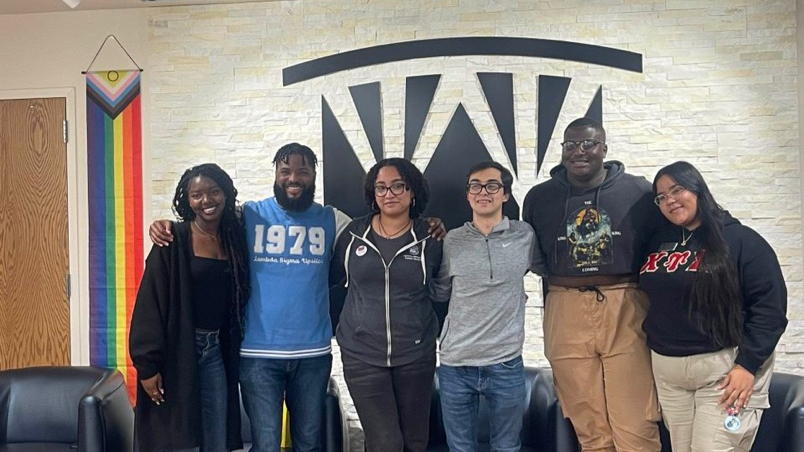
A few of the panelists included Ellis Bonds (He/Him), the director of Residential Education and Student Support Services for Residential Life, Emily Fernandez (She/Her), the Vice President of Pride Alliance, and Andrew Simoes (He/Him), a head TALONS, and Terron Oglesby (He/They), an EOF 2021 student.
Many questions included aspects of understanding and embracing the panelists’ identities in the LGBTQIA+ community, how their intersectionality affected their coming out, and how institutions like Stockton University can better support their POC and LGBTQ+ students.
When speaking about POC and LGBTQ+ safety on campus with things like homophobia, transphobia, and racism, Ellis Bonds said, “I remember at one point in time Stockton was either the safest or the second safest school in the state of New Jersey…how is it possible, we’re an open campus. Because the reality is that when you exist in a predominantly white space, when you exist in a predominantly hetero[sexual] space, when you exist in predominantly male spaces, whether the statistics are saying one thing or not, you should assume that these things are happening.”
Bonds continued to say that he understands that if he sees discrimination on campus he can freely leave, while also acknowledging the fact that many minority students cannot do the same due to scholarships or financials.
When asked about what a student view on a safe campus environment can look like for LGBTQ+ students, Andrew Simoes said, “We all see the craziest things that are happening in the world, and we see how higher education is under attack. We see all over the country, conservative states and liberal states. So it doesn’t matter what type of state you live in because things can change like that. So that falls on institutions of higher learning to really be that bulwark and provide, saying, ‘Hey, we know what’s going on.’ We’re fortunate in New Jersey to have a government that is supportive and is really doing its best to try to support the community even though they have their shortcomings. It falls on institutions of higher ed to really be that, ‘we see this community, we value your input to our institution, and we want you to see that your voices are heard, and we value your voices just as much as our other population.’ I can bring just as much to the table as someone straight, just because I’m gay doesn’t mean I bring more or less, or I even matter less over my straight counterpart.”
The panelists all gave advice that allies of the POC or LGBTQ+ communities can do to positively impact them. Many key points were for allies to listen and support their friends or family members, reaching out to check on them, or giving them a space of comfort when needed.
When closing out the panel, panelists were asked to give words of encouragement and wisdom to those who may be struggling with their identity or sexuality.
“Find out what makes you happy, because if you’re not happy with your decision [coming out], it’s going to backfire…and if you come out be 100% with it because it’ll change your life,” said Terron Oglesby.
“For the queer, black, and brown people, you are never too queer for your black and brown spaces and you are never too black and brown for your queer spaces. Always make room, always bring a chair, and bring a friend and you’ll find your way.” said Emily Fernandez.
There is always a space for somebody, whether they are a person of color or LGBTQIA+. The Multicultural Center and the Women’s, Gender, and Sexuality Center are open during the week and there are services on campus to report if someone is being discriminatory. There are also counseling services for students to talk about anything that is on their minds: everybody is important.
Categories: Campus Life



 stocktonargo.com