
 Allie Agostino
 Iman Ahmed
 Christian Alvarez
 Brianna Barretta
 Kirah D. Cobbs
 Ryan Connelly
 Victoria Corless
 Mary DeRose
 Saira Desai
 Matthew Dietrich
 doogaho
 Dylan Kaminski
 Esmeralda Rivera
 Erin Nevin
 Anthony Bolton
 fourriea
 Jecce H
 jaredkeane
 Sarah Kropinack
 Laura Leonel
 Kayla Lavecchia
 liptack2gostocktonedu
 mary ceceilia
 Matt Cavallo
 Eli Mitros
 Elizabeth Myers
 Tyler Nicosia
 CHARLES OBIRINANWA
 Kollisa Pimentel
 Vincent Rapallo
 Shakila Riaz
 Tori Robbins
 Diamond Rogers
 Kamelea Saitova
 sarahcipkins
 The Argo
 suzannaccook
 Amanda Tague
 Jaedyn Thomson
 Danna Urias
 Breanna Vanaman
 Jennifer Vaneman
 victoriaorlow
 yoneluna
 Zuleika Rodriguez
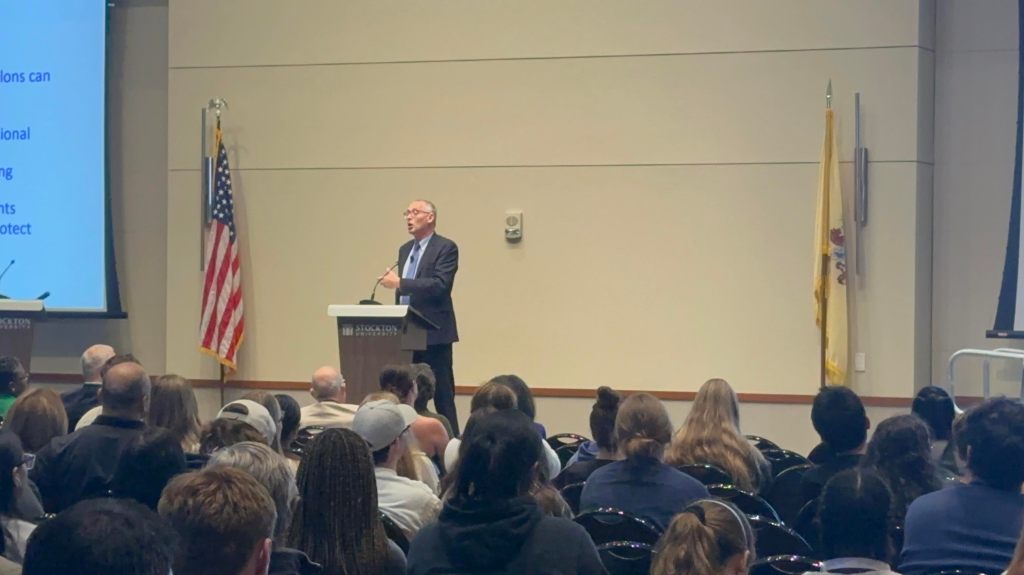
On Tuesday, September 24, 2024, Stockton University hosted its annual Constitution Day, with special keynote speaker Richard L. Hasen lecturing on and discussing the importance of voting rights within the Constitution.
Since 2006, Stockton has upheld the tradition of commemorating Constitution Day as a time to discuss and converse about society’s main issues within constitutional law that affect everyone. During this day, Hasen talked about the right to vote, which is not accessible for many targeted and marginalized groups. He then went into a breakdown of what his lecture would include, breaking his presentation down into three groups: “Why We Need a Constitutional Right to Vote,” “The Contents of a Constitutional Right to Vote,” and most importantly, “How to Pass an Amendment Guaranteeing a Right to Vote.”
Before the event began, Professor Claire Abernathy made a few opening remarks about Constitution Day and thanked the Constitution Day committee with Associate Professors Lauren Balasco and Tina Zappile. It is important to note that this event was sponsored by the William J. Hughes Center for Public Policy and the American Democracy Project at Stockton, the Stockton University Foundation the University Advancement, and the Office of Provost. After the first opening remarks, President Joe Bertolino came up and introduced our keynote speaker and welcomed everyone to Stockton University’s 19th annual day and our keynote speaker.
Richard L. Hasen is an American legal scholar, author, and law professor at the University of California where he specializes in legislation and election laws. In his most recent book, “A Real Right to Vote: How a Constitutional Amendment Can Safeguard American Democracy,” he details how many citizens within America have been “disenfranchised” and faced plenty of struggle and barriers when it came to voting.
In order to get into the depths of his topic, Hasen gave a quick backstory about Virginia Minor and Jackson Giles. Virginia Minor was an American women’s suffrage activist. She wanted to be able to vote for the next president but was told she is not allowed to register because she was a woman in a world where only men could vote. She filed a lawsuit and went to the Supreme Court, this case known as Minor v. Happersett. Here, she argued that the 14th Amendment to the United States should’ve given women the right to vote, especially since she was an American citizen and having citizenship she should be grounds for voting. However, the Supreme Court shut her down and told her that voting is not a privilege; it’s not a right and it’s something that the states decide. Thus, it was not until the 1920s that the Constitution stated everyone was allowed to vote.
Hasen also noted that “there is no part of the constitution in the original part of the amendments that guarantees anyone the right to vote for president […] state legislatures shall direct the appointment of electors.” He lastly mentioned that “we didn’t get to vote for Senators until the 17th Amendment was passed.” Then, he told the story of Jackson Giles, an African American man who planned to register to vote in Alabama, a state that at the time, had policies prohibiting black voters. Giles went to the Supreme Court and stated that he was a citizen, and he has knowledge of the Constitution and understands the 15th Amendment which states the prohibition of disenfranchising of voters strictly because of their skin color or any other conditions of servitude. The Supreme Court once again denied, stating to Giles that it was up to Alabama to make the decision whether he has the right to vote or not. It has been a battle between Congress and court for voters rights since then.
After this informative introduction, Hasen then went into his lecture and the three aforementioned categories he divided it into. The first part, “Why We Need a Constitutional Right to Vote,” discussed why the nation should amend the Constitution to affirm the right to vote. Hasen discussed what would need to be in the document for said action, and he mentioned that in the back of his new book, he tried to draft an idea for such. Then he went over is how this action would happen, starting with the importance of promoting political equality. One page one of his book, he discloses that “Among other groups, African American voters and women were mostly disenfranchised from the very founding of the United States solely on the grounds of their race or gender.” He went into detail about de-escalating voting wars and thwarting election subversion, and he didn’t forget to mention where the Constitution lacks fair, affirmative rights to vote; with equality being non-existent, this leaves many Americans unprotected in terms of socioeconomic rights. He pointed out that it seems as though the Constitution comes up with ways to divert voters’ rights to make sure that votes don’t necessarily favor one specific candidate. Hasen made sure to give great examples of people whose rights to vote were strictly prohibited, even though they weren’t great points to discourage the people’s right to vote.
This leads to the second part of his presentation, “The Contents of a Constitutional Right to Vote.” Within this, Hasen asserted that all adults, citizens, residents, and non-felons can vote for President. He mentioned this because, at one point, it was known that felons shouldn’t have the right to vote. He pointed out the continuous inconsistency and lack of voting rights that convicted felons deal with; therefore, he said that we need to find a way to balance equal weighing for voters so there can be equal and “non-burdensome voting opportunities.” Before he concluded, he ended his section on the protection of minority voting rights and broad congressional power to protect rights. Through his extensive research and his experience within voting litigations, Hasen didn’t fail to back up his points with vital information, and research.
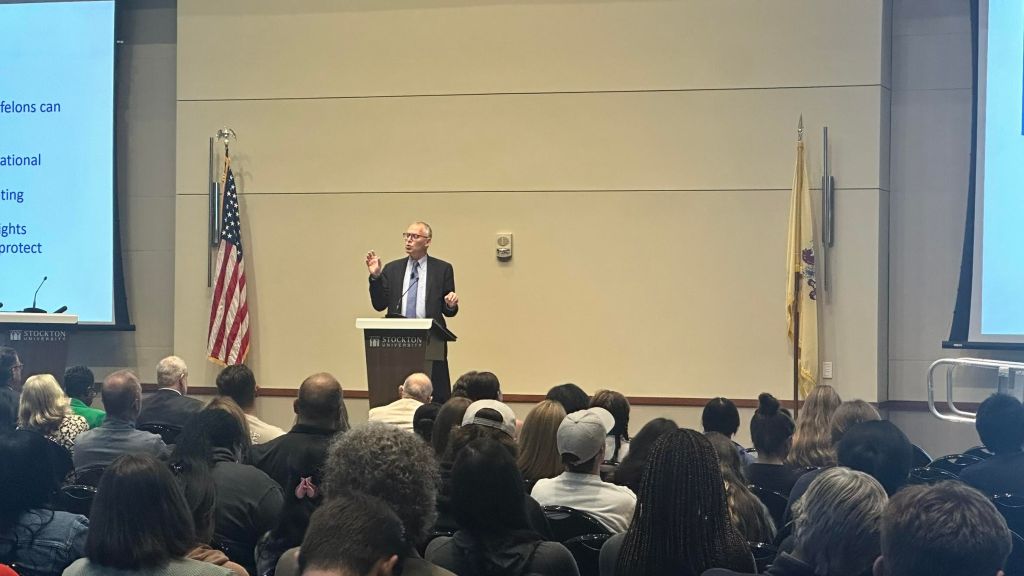
The last segment of Hasen’s lecture, “How to Pass an Amendment Guaranteeing a Right to Vote,” delved into how one would go about passing a better constitutional law and how we would get there in terms of extending rights to vote for different groups. If voting rights were accessible to American citizens, even citizens within U.S. territories this would have a better turnout and composition of electorate integrity. This would initially help with a greater election against subversion. He then states that out of all the amendments that are about voting rights, they all end the same way and Congress actually has a vast reservoir of power to protect voters. The best way to protect voters’ and citizens’ rights to vote is to not divert their socio-economic status or background to a mere level of lower class that doesn’t belong with societal normalcy.
Hasen ended his lecture by stating that Americans “think about the Constitution as a sacred document, like a Bible, almost like a religious text that we can’t mess with it.” However, he mentioned that the nation can’t think about it in that context and should not revere the text as a “dead document that can’t be changed.” If anything, Hasen said that focus should be on how to improve this document so America can improve the quality of living for its citizens. One of the leading Conservative Justices in the Supreme Court even pointed out how hard it is to amend our Constitution, and Hasen used this comment for his point that it should be easier to update and better the Consitution. The last thing he left the audience with is “It’s time to get to work. Democracy is not going to protect itself, and don’t resort to cynicism: ask how we can organize to make our country better and approve our democracy.”
Before the Q&A session, there were closing remarks, once again thanking our keynote speaker and Stockton students, alumni, and staff for coming out and supporting the annual Constitution Days. Also, it was relayed that each vote does matter and that one should not subjugate their right to vote because someone else does.
In the Q&A sessions, there were lots of questions about voting restrictions and rights, specifically regarding the pattern with different cases that relinquished distinguishing voters’ rights. For each question, Hasen answered flawlessly with more research, honing in on how the Constitution changes their laws based on framed voter integrity and where they want to shape votes because of how certain people and groups may vote. Towards the end of the session, Hasen doesn’t reminded folks that voting is something for the people, and the President having a say in voting should not be allowed — this just gives them a chance to gain more individualistic interests, which can quiet people’s vote and voices.
For more about Richard Hasen and the Constitution Day lecture, visit stockton.edu.
Categories: Stockton News




 stocktonargo.com