
 Allie Agostino
 Iman Ahmed
 Christian Alvarez
 Brianna Barretta
 Kirah D. Cobbs
 Ryan Connelly
 Victoria Corless
 Mary DeRose
 Saira Desai
 Matthew Dietrich
 doogaho
 Dylan Kaminski
 Esmeralda Rivera
 Erin Nevin
 Anthony Bolton
 fourriea
 Jecce H
 jaredkeane
 Sarah Kropinack
 Laura Leonel
 Kayla Lavecchia
 liptack2gostocktonedu
 mary ceceilia
 Matt Cavallo
 Eli Mitros
 Elizabeth Myers
 Tyler Nicosia
 CHARLES OBIRINANWA
 Kollisa Pimentel
 Vincent Rapallo
 Shakila Riaz
 Tori Robbins
 Diamond Rogers
 Kamelea Saitova
 sarahcipkins
 The Argo
 suzannaccook
 Amanda Tague
 Jaedyn Thomson
 Danna Urias
 Breanna Vanaman
 Jennifer Vaneman
 victoriaorlow
 yoneluna
 Zuleika Rodriguez
Far from his war-torn homeland of Ukraine, Mykhailo Chabanovskyi grapples with the ache of being separated from his scattered family.
Chabanovskyi, 18, is attending Stockton University here on his own. After Russia invaded his homeland more than two years ago, his parents and sister were forced to flee Kharkiv, Ukraine, for Germany, while his grandparents chose to remain in the country.

It is all a lot to handle for both Chabanovskyi and fellow Stockton student Khrystyna Svystovych, also 18, both of whom arrived in the United States from Ukraine in August 2021 as part of the Future Leaders Exchange Program created by the U.S. Department of State.
FLEX provided the two homes and places to attend high school: Chabanovskyi in Portland, Oregon; Svystovych in a small town in Ohio.
But upon graduation, and with their home country in turmoil, they faced an uncertain future, until a handful of colleges, including Stockton, agreed to provide an education and room and board for two students.
Now, the two have financial support and a place to attend four years of college, thanks to the university and its nonprofit Stockton Foundation, said Natalja Manger, Stockton’s assistant director of international recruitment and admissions.
A total of 248 U.S. institutions reported hosting students from Ukraine in spring 2022, shortly after the invasion began, according to a report from the Institute of International Education.
Stockton was a last-ditch effort for Svystovych and Chabanovskyi to avoid having to return to Ukraine after high school. Chabanovskyi said Stockton’s support has been significant, a contrast to the vague promises from other institutions regarding aid for Ukrainian students.
Now, the two have financial support and a place to attend four years of college, thanks to the university and its nonprofit Stockton Foundation, said Natalja Manger, Stockton’s assistant director of international recruitment and admissions.

A total of 248 U.S. institutions reported hosting students from Ukraine in spring 2022, shortly after the invasion began, according to a report from the Institute of International Education.
Stockton was a last-ditch effort for Svystovych and Chabanovskyi to avoid having to return to Ukraine after high school. Chabanovskyi said Stockton’s support has been significant, a contrast to the vague promises from other institutions regarding aid for Ukrainian students.
Svystovych loves the on-campus Dunkin’, where she can grab a cappuccino and a pink-frosted donut. Chabanovskyi, who has a dorm on the Atlantic City campus, loves his view of the city and the beach, not to mention the fact that he’s living in a city that served as the model for his favorite board game, Monopoly.
“I am adjusting slowly. I really like the ocean, lakes and woods. The Galloway campus reminds me of the nature at home,” Svystovych said. “There are always so many things to do here, and I feel like I grew twice as much as a person during one semester here than in my two years of high school exchange.”
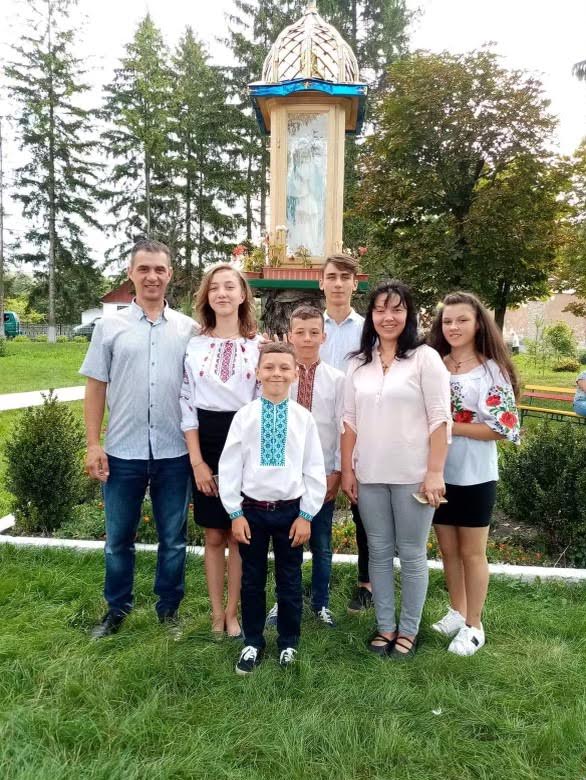
Svystovych is from the small town of Uhniv in the western part of Ukraine. Her parents, Vasyl and Tetiana, moved to Poland for their jobs, but her five other siblings are still in Ukraine. She said they haven’t seen too much fighting since Uhniv is so close to Poland, but at the beginning of the war her family was without electricity for months.
“I love and miss them more than anything right now, but my visa situation is not clear yet,” Svystovych said. “Even if I do go back home, I won’t be able to come back to the U.S. Sometimes, I miss my family so much that I don’t even care about the war and bombings, I just want us to be together, but I understand that I am here for a reason. I really love my life in the U.S.”
Manger said Chabanovskyi and Svystovych arrived in the U.S. as children “brave enough to travel into the unknown.”
“But as the war began, they realized that the way they envisioned their future isn’t going to be possible anymore and they are going to have to reinvent it for themselves,” Manger said.
As for now, they are making the best of their situation. But the war is never far from their minds.
Seeing his favorite spots bombed out and in ruins saddens Chabanovskyi and makes him worry about his family.
“One thing I know for a fact is that if I was to come back to Ukraine right now, I wouldn’t be let back out,” Chabanovskyi said. “As an 18-year-old, there is a chance I could be drafted into the Ukrainian army.”
This story was originally obtained, written and published by Matt Cavallo for The Press of Atlantic City.
Categories: News and Events, Stockton News, World News



 stocktonargo.com