
 Allie Agostino
 Iman Ahmed
 Christian Alvarez
 Brianna Barretta
 Kirah D. Cobbs
 Ryan Connelly
 Victoria Corless
 Mary DeRose
 Saira Desai
 Matthew Dietrich
 doogaho
 Dylan Kaminski
 Esmeralda Rivera
 Erin Nevin
 Anthony Bolton
 fourriea
 Jecce H
 jaredkeane
 Sarah Kropinack
 Laura Leonel
 Kayla Lavecchia
 liptack2gostocktonedu
 mary ceceilia
 Matt Cavallo
 Eli Mitros
 Elizabeth Myers
 Tyler Nicosia
 CHARLES OBIRINANWA
 Kollisa Pimentel
 Vincent Rapallo
 Shakila Riaz
 Tori Robbins
 Diamond Rogers
 sarahcipkins
 The Argo
 suzannaccook
 Amanda Tague
 Jaedyn Thomson
 Danna Urias
 Breanna Vanaman
 Jennifer Vaneman
 victoriaorlow
 yoneluna
 Zuleika Rodriguez
On Thursday, November 10, the Social Work Club in collaboration with the Women’s, Gender, and Sexuality Center hosted ‘Understanding and Embracing Diversity – LGBTQ+ Terminology and Experiences with Dr. Austin Angiollilo’. The event which took place on the Galloway campus sported great attendance, which Dr. Angiollilo took full advantage of, asking the audience to tell him what they already knew about the LGBTQ+ community and inviting them to ask questions, emphasizing that “nothing is off limits.”
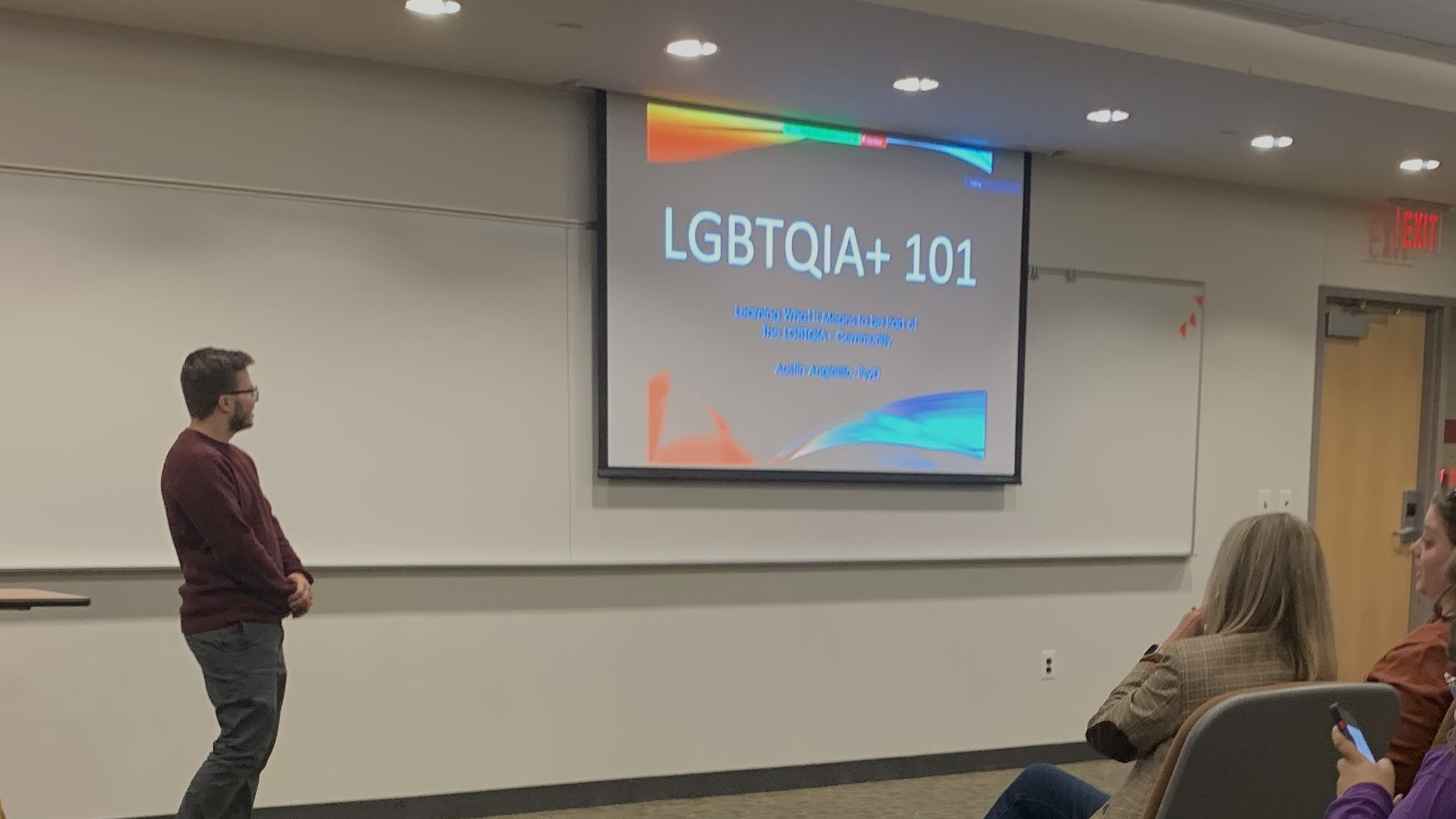
At the center of the night’s discussion was the idea of learning what it means to be part of the LGBTQIA+ community, and that there is not just one way to be a part of the community, but rather the experiences look different for everyone. The topics covered include things like what the letters LGBTQIA and beyond stand for, preferred terms, transitioning, and how to be an active ally. Dr. Angiollilo, PsyD, shared information both from his professional life and personal experiences to put together the presentation.
Dr. Angiollilo went over some of the science behind being transgender, including that the brain of transgender individuals most closely resembles that of the gender they identify with rather than what they are assigned at birth. He also discussed his own personal experience as someone who transitioned as an adult, explaining that for him it would have been more dangerous to transition before puberty, as it would have worsened the bullying he faced socially. He made sure to emphasize that his experience is only his own and that it does not mean that other individuals have the same factors to consider; although the right for children to medically transition is still highly debated.
On the topic of being an ally, Dr. Angiollilo described how it is important to “confront homophobia and transphobia as it occurs,” while still keeping safety in mind. It is also critical to acknowledge the privileges that one holds and use that voice for good. Actively listening to the experiences of members of the community, validating them, being curious and open to new ideas, expressing comfort, and outwardly expressing support are all ways to be a good ally. One must remember boundaries, and be cautious not to ask invasive questions that would not be asked of anyone else.
When asked about what it means to him to speak at events such as this one and inform communities about the LGBTQ+ community, Dr. Angiollilo said, “It just shows that people want to learn and care about a community that has historically wanted to be learned and cared about. If I can participate in sharing that knowledge, I can’t think of a better way to spread that love.”
Categories: Campus Life, Stockton News



 stocktonargo.com