
 Allie Agostino
 Iman Ahmed
 Christian Alvarez
 Brianna Barretta
 Kirah D. Cobbs
 Ryan Connelly
 Victoria Corless
 Mary DeRose
 Saira Desai
 Matthew Dietrich
 doogaho
 Dylan Kaminski
 Esmeralda Rivera
 Erin Nevin
 Anthony Bolton
 fourriea
 Jecce H
 jaredkeane
 Sarah Kropinack
 Laura Leonel
 Kayla Lavecchia
 liptack2gostocktonedu
 mary ceceilia
 Matt Cavallo
 Eli Mitros
 Elizabeth Myers
 Tyler Nicosia
 CHARLES OBIRINANWA
 Kollisa Pimentel
 Vincent Rapallo
 Shakila Riaz
 Tori Robbins
 Diamond Rogers
 sarahcipkins
 The Argo
 suzannaccook
 Amanda Tague
 Jaedyn Thomson
 Danna Urias
 Breanna Vanaman
 Jennifer Vaneman
 victoriaorlow
 yoneluna
 Zuleika Rodriguez
Written for The Argo by Gianna Schiattarella
On Tuesday, October 10, Stockton University held its 20th Annual Fannie Lou Hamer Human and Civil Rights Symposium. The event featured guest speaker and California Secretary of State Shirley N. Weber, who credited Stockton University for producing one of the best programs honoring the life and legacy of Fannie Lou Hamer in the country.
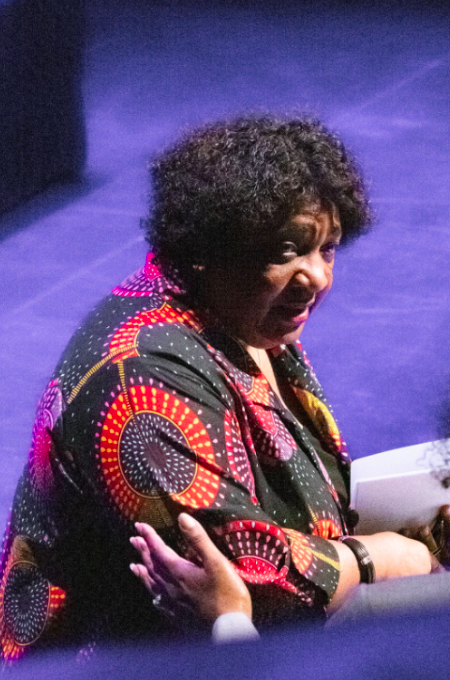
Weber’s presence was widely supported by students and faculty alike, who gathered to hear the powerful message about social justice that she had prepared. Her speech followed the unveiling of a seven-foot statue of Hamer just hours before at Jim Whelan Boardwalk Hall in Atlantic City. This was the historical location of the 1964 Democratic National Convention where Hamer so passionately advocated for the equal rights of Black Americans.
Fannie Lou Hamer was an African-American sharecropper in Mississippi. She was beaten so severely in jail following the arrest of her and other activists, leaving her physically disabled. Against many odds, Hamer continued to advocate for her exploited people. “She didn’t know if anyone was going to ever say her name,” says Doctor Weber, “…[or] would ever put a statue up for her… she must have understood that something was greater than herself, and that was something called self-determination.”
Civil rights are a crucial part of American democracy, which leads many to wonder: where are we now? Weber explained that she never would have thought that we, as a society, would still be grappling with voting rights.
As California’s Secretary of State, Weber expressed her pride in their voter registration policy, stating that “you can register to vote on the day of the election in California.” This statement ruptured applause from the audience. However, she also acknowledged that there are many challenges faced by voters today, such as long lines at the polls, the implementation of ever-evolving unnecessary security identification measures, and fewer polling centers in communities that demographically represent minorities.
One of Hamer’s most famous phrases—“I am sick and tired of being sick and tired”—still rings true for many people today. This distinguishing quote expresses Hamer’s fight for social justice and unwavering support for the greater good of all people. May she continue to be honored and may her actions and powerful words forever inspire activists to protect and encourage true democratic institutions.
Categories: News and Events, Stockton News




 stocktonargo.com