
 Allie Agostino
 Iman Ahmed
 Christian Alvarez
 Brianna Barretta
 Kirah D. Cobbs
 Ryan Connelly
 Victoria Corless
 Mary DeRose
 Saira Desai
 Matthew Dietrich
 doogaho
 Dylan Kaminski
 Esmeralda Rivera
 Erin Nevin
 Anthony Bolton
 fourriea
 Jecce H
 jaredkeane
 Sarah Kropinack
 Laura Leonel
 Kayla Lavecchia
 liptack2gostocktonedu
 mary ceceilia
 Matt Cavallo
 Eli Mitros
 Elizabeth Myers
 Tyler Nicosia
 CHARLES OBIRINANWA
 Kollisa Pimentel
 Vincent Rapallo
 Shakila Riaz
 Tori Robbins
 Diamond Rogers
 Kamelea Saitova
 sarahcipkins
 The Argo
 suzannaccook
 Amanda Tague
 Jaedyn Thomson
 Danna Urias
 Breanna Vanaman
 Jennifer Vaneman
 victoriaorlow
 yoneluna
 Zuleika Rodriguez
Working Without a Contract. Perhaps you’ve seen the phrase plastered on signs outside of faculty and staff offices as you walk through Stockton’s campus and wondered what it meant. For those familiar with what is now acknowledged as 2023’s “summer of strikes,” these signs confirm to students what many university employees across the nation already know: that the higher education industry—and in this case, the State government itself—is susceptible to the same exploitative practices that hundreds of thousands of American laborers have spent countless hours rallying to combat.
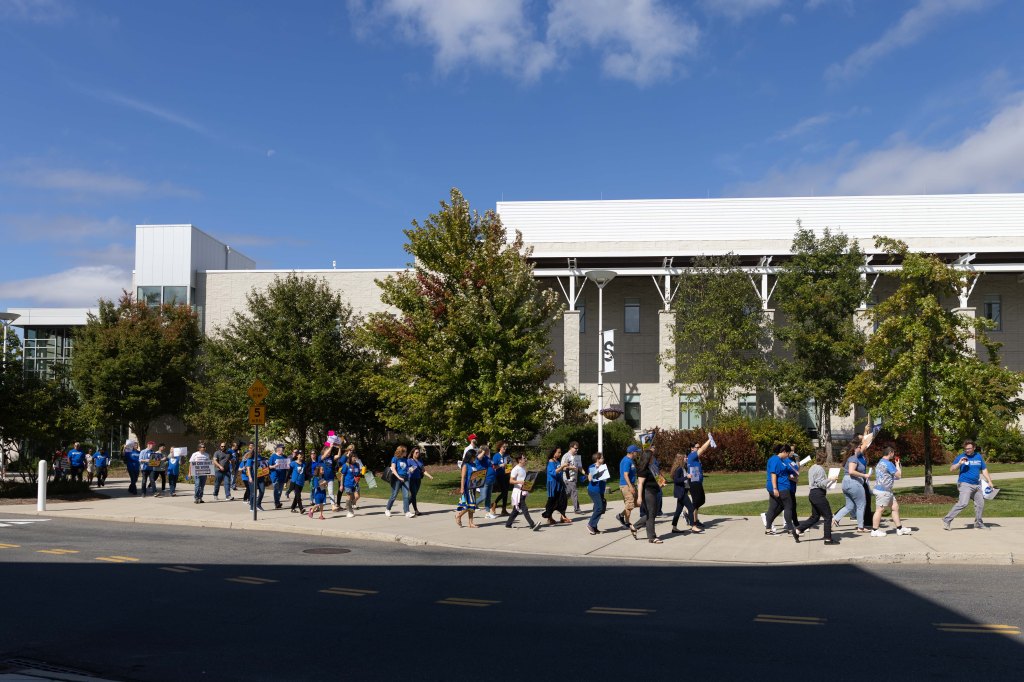
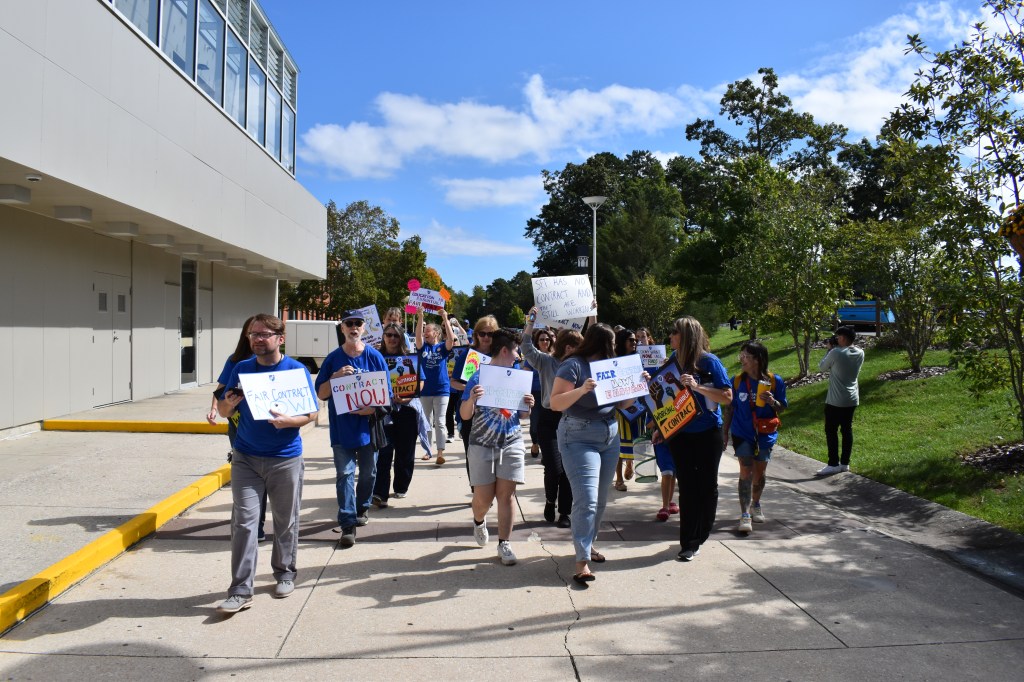
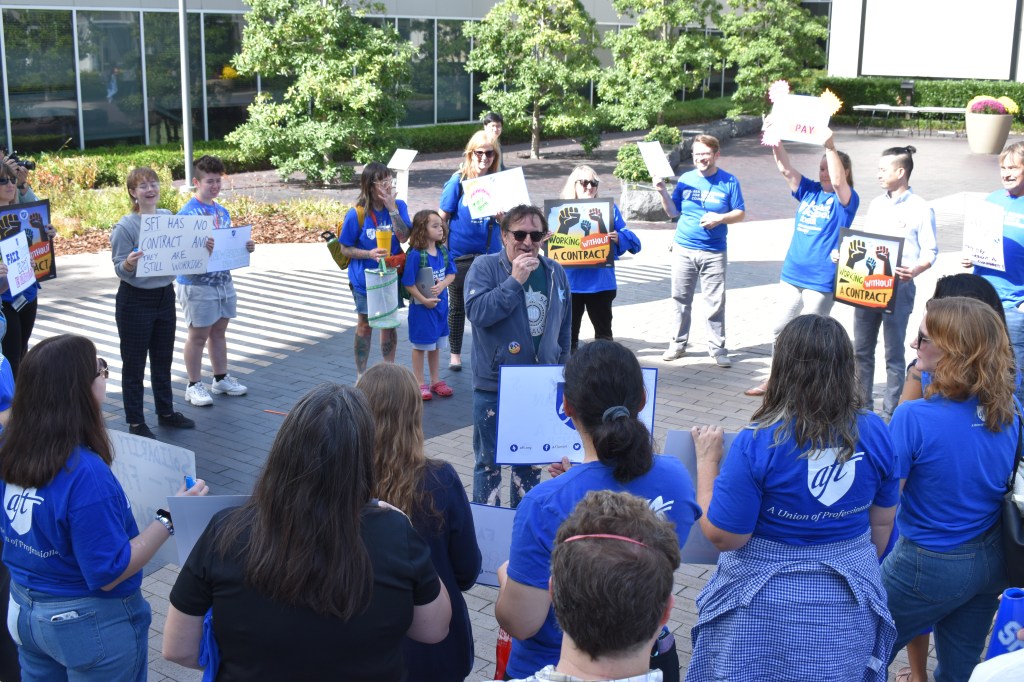
On Thursday, October 5, 2023, members of the Stockton Federation of College Teachers local 2275 (SFT 2275) led a series of demonstrations throughout Stockton University’s Galloway Campus as part of their fight for a fair working contract—which they have been made to work without for just over three months. To gain better insight into the challenges that Stockton’s faculty and staff have been facing, The Argo reached out SFT 2275 President Emari DiGiorgio, who explained the circumstances surrounding the movement, why it is important to all members of the University community, and what students can do to help.
What’s Been Going On?
As previously stated, Stockton’s faculty and staff have been working without contracts for over three months, following the expiration of their most recent contract on June 30, 2023. Since then, said DiGiorgio, they have continued to serve Stockton, its students, and by extension the State of New Jersey. “We believe in the work that we do. We also believe that our labor has value and that we deserve a fair contract,” she stated.
While the Union has since experienced some movement on smaller issues during these statewide negotiations— including the decision to modestly increase the tuition reimbursement amount, extending it beyond a terminal degree, and extending tuition waiver options for dependents of deceased or retrenched employees—SFT 2275 is yet to achieve the job protections and financial gains that they have spent months fighting for.
“As the number of NTTPs increases on our campuses, it’s vital that these valued colleagues are protected by as many of the provisions in the Master Agreement as possible. Similarly, we have not seen enough progress on the overload or adjunct rates. As a point of comparison, Rutgers was able to secure a 36% wage increase for its adjunct faculty. This group of contingent faculty is historically underpaid, with the fewest protections,” DiGiorgio said. “On Friday, October 6th, one day after the rally, the Council met with the State to continue negotiations on the Adjunct Contract. The State’s most recent adjunct salary proposal offered increases smaller than what we achieved in the previous contract. This is unacceptable. We value the expertise and labor of our adjunct colleagues.”
What is SFT 2275?
Organized in 1972, SFT 2275 is a union of professionals established to protect workers’ rights at Stockton University. This union represents the following groups:
- full-time and part-time faculty;
- adjunct faculty;
- faculty librarians;
- NTTPs; and
- full-time and part-time professional staff.
SFT 2275 is among the original members of the Council of New Jersey State College Locals/AFT-AFL-CIO. According to DiGiorgio, this “Council” is comprised of eleven locals and represents over 10,000 of the aforementioned employees from The College of New Jersey, Kean University, Montclair State University, New Jersey City University, Ramapo College of New Jersey, Stockton University, Rowan University, Thomas Edison State University, and William Paterson University.
Every four years, the State and the Council gather to discuss and formulate a “master agreement,” which serves as the final word on matters such as salaries, grievance procedures, general procedures on promotions, the reclassification process, multi-year staff contracts, and appeals. Prior to the previous contract’s expiration, the Council had begun preparing for negotiations as early as the late summer of 2022. DiGiorgio stated that union members had then prepared their offers over winter break, and have been “bargaining in good faith since January 2023.”
“It’s not unusual for contract negotiations to run over; however, it is deeply frustrating that this is the pattern during each cycle, and state and municipal workers have made a lot of sacrifices during the pandemic,” she said. “It is time for all of us to receive fair and commensurate financial increases.”
DiGiorgio then referenced one such sacrifice that took place in July of 2020, when the Council signed a Memorandum of Agreement with the State in regard to unpaid furlough days. “We negotiated this agreement, as did other State public unions, to protect as many jobs as possible by avoiding massive layoffs following the economic crisis caused by COVID-19.”
She also cited the State’s 2022 proposal to increase workers’ healthcare premiums and the union negotiations that followed. “If we had not come to an agreement, the State could have imposed an 18% contribution increase. With negotiations, we were able to limit the contribution increase to 3%, though our specialist co-pays increased from $15 to $30, and Urgent Care co-pays increased from $15 to $45,” she said. “Taking unpaid furloughs and paying more for our healthcare, during the pandemic, resulted in a net loss of income over the four years of our contract.”
Why Does It Matter?
According to DiGiorgio, Thursday’s demonstrations were a “visible reminder that the members of SFT 2275 stand in solidarity with each other, united in our pursuit of fair wages, dignity, and justice for all members of the campus community.” DioGiorgio and her colleagues were joined by Stockton students, members of the campus chapters of CWA and IFPTE, Stockton Police, and managers like Dr. Terricita Sass, Stockton’s Executive Vice President and Chief of Staff.
She also referenced the impact that union demonstrators have had on the national landscape throughout American history, stating that “labor protests and workers’ movements have shaped social and economic change in our country. Faculty and staff want students to be aware of the issues affecting workers, unions, and the broader labor movement. We want students to understand their own rights and advocate for the value of their own and other’s labor.”
The fight for fair wages and labor protections is also vital in maintaining Stockton’s ability to provide New Jersey students with the education that they deserve. In order for institutions like Stockton to attract and retain quality scholar-teachers, DiGiorgio argues, they must be able to provide their employees with fair wages. Stockton and the other eight institutions that are involved in this fight for a fair contract are all public institutions that were established by the State to provide affordable educational opportunities to their respective communities. By denying its employees the financial support and legal protections needed to perform their duties as educators, the State ultimately goes back on its promise to provide an accessible, quality higher education for its citizens.
The State’s refusal to meet the union’s demands does not just impact faculty, staff, and those looking to pursue careers in higher education. It severely jeopardizes your education.
How Can I Help?
Every day, our faculty and staff work tirelessly to ensure that we receive a quality education at Stockton University, in spite of growing employment instability in their fields and the State’s continual hesitance to provide them with adequate financial compensation and job protections. Now, as they continue their fight for a fair contract, the student body has the opportunity to show them the same support that they have shown us in our endeavors. Collective action between students, staff, and faculty is the key to achieving justice in higher education.
Students and other members of the local community can contact the New Jersey Office of the Governor to advocate for a fair contract for faculty and staff. To do so, use this form and select “Education” and “N.J. Colleges and Universities.” The Governor’s Office also has an active social media presence on Twitter, Facebook, Instagram, Snapchat, and YouTube. Each of these accounts can be located under the “Social” tab on their website’s homepage.
Students may also visit the Union’s office, H-230, which is located in Stockton’s Galloway Campus, or email them directly at sft@stockton.edu.
Categories: Stockton News



 stocktonargo.com