
 Allie Agostino
 Iman Ahmed
 Christian Alvarez
 Brianna Barretta
 Kirah D. Cobbs
 Ryan Connelly
 Victoria Corless
 Mary DeRose
 Saira Desai
 Matthew Dietrich
 doogaho
 Dylan Kaminski
 Esmeralda Rivera
 Erin Nevin
 Anthony Bolton
 fourriea
 Jecce H
 jaredkeane
 Sarah Kropinack
 Laura Leonel
 Kayla Lavecchia
 liptack2gostocktonedu
 mary ceceilia
 Matt Cavallo
 Eli Mitros
 Elizabeth Myers
 Tyler Nicosia
 CHARLES OBIRINANWA
 Kollisa Pimentel
 Vincent Rapallo
 Shakila Riaz
 Tori Robbins
 Diamond Rogers
 Kamelea Saitova
 sarahcipkins
 The Argo
 suzannaccook
 Amanda Tague
 Jaedyn Thomson
 Danna Urias
 Breanna Vanaman
 Jennifer Vaneman
 victoriaorlow
 yoneluna
 Zuleika Rodriguez
Submitted anonymously to The Argo
At approximately 6:40 a.m. on Friday, September 15, 2023, students in Kesselman Hall and the new Atlantic City Phase II residential building were awoken by loud alarms. Unfortunately, this alarm was not the first, and wouldn’t be the last. Spanning from the early hours of the morning to as late as midnight, students have been subject to loud, persistent fire alarms since the summer semesters for seemingly no reason. The number can even reach an astounding six fire alarms in one day. Regardless of the time of day, weather conditions, safety, or quiet hours, students are still expected to evacuate the premises or be subject to a write-up.

It took a long time for Residential Life to acknowledge the issue at all, leaving students in the dark until September 12. On this day, they sent out an email apologizing for the frequency of the alarms, but this did not come without a deflection. According to Stockton, “Over 80% of the fire alarms have been related to steam, cooking, or smoking.” Some students found themselves in disbelief, not only in Stockton turning the blame on students but also in the things asked of them. Of the requests students found themselves most frustrated with was that they keep their doors closed following a shower, despite the potential for mildew growth and the negative impacts it can have on the health of individuals with asthma and other related health conditions.
One resident of Kesselman Hall—who would prefer to stay anonymous—had their hour-long online quiz interrupted by one of these alarms on September 14 at approximately 2:10 p.m. Forty minutes into their hour-long math quiz, they were forced to abandon their work with the timer still ticking. “We had to go down and it took I would say ten to twelve minutes. The process of getting down there, waiting for the alarms to be cleared, and coming back upstairs, when I got back I had five minutes left,” they said.
This is causing high stress for students in online and asynchronous classes, as it is common for students to evacuate while holding their electronics while on a Zoom call. Students have described that experience as “difficult” and said it makes it almost impossible to study in their residencies, opting instead to do as much of their work as possible in academic buildings. One student detailed how they often book library study rooms on the Galloway campus for their online classes, opting to commute the twenty minutes instead of having to deal with the constant interruptions to their learning.
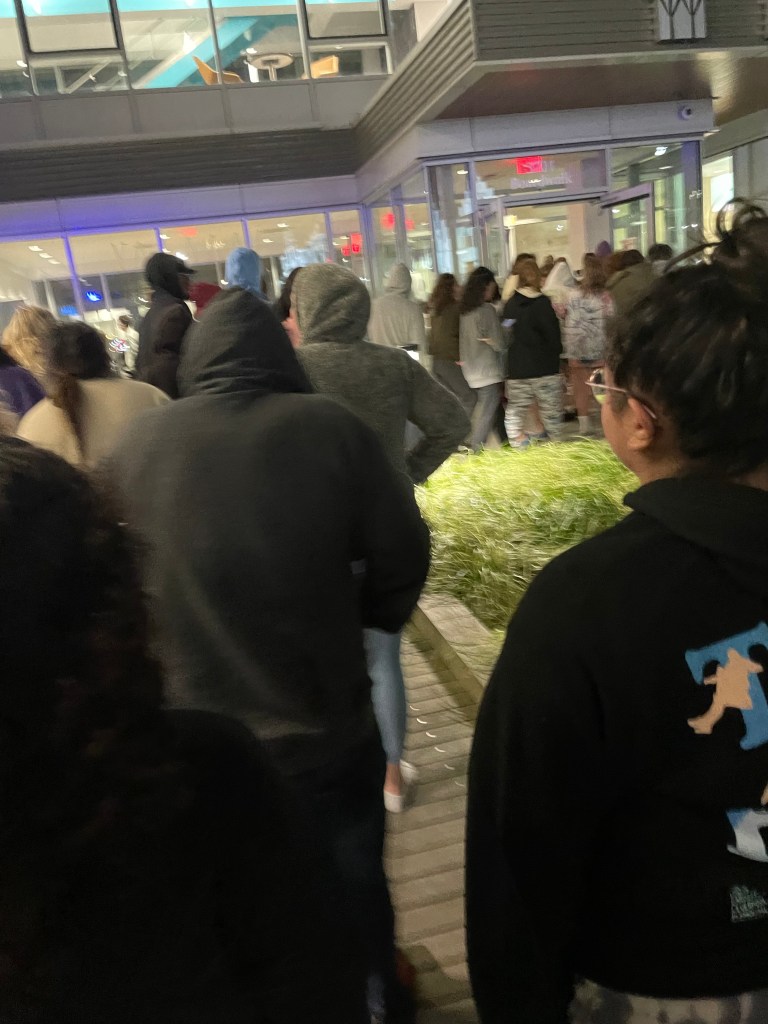
Another student detailed how the amount of mandatory evacuations has worsened their health. This student has a condition that leaves them temporarily unable to walk without the use of crutches. As a resident of one of the highest floors in the building, they are not allowed to use the elevator during such evacuations. “On days when I can’t walk, I have to climb down around eight flights of stairs using my hands. I have to essentially push myself down each step. It takes a lot of strength and energy which I don’t have and it’s honestly humiliating.”
In regards to getting back up to their residency, they said, “When I can walk, I have to walk all the way around the building to get back in through the front entrance, but when I have to crawl down, I never actually have enough time to make it to the bottom. I still have to evacuate just to avoid getting written up, but by the time I climb back up I’m tired out and my leg pain worsens. My doctors told me not to use it too much, but it’s that or risk losing my housing for not following the rules.” Furthermore, this student is worried that even if they did break the rules and failed to evacuate, their life would be at risk in the case of an actual emergency.
However, these constant alarms are not only a disturbance to students’ peace, but they’re also a very real threat to students’ well-being. Many students have also expressed their refusal to evacuate. Some have claimed that in the event of an actual fire, they would rather risk physical injury or even death than go outside should it be another false alarm.
To make matters worse, as students pour back into the residential buildings from the streets and boardwalks of Atlantic City, security neglects to properly screen all who enter the building. Protocols for Atlantic City residential halls require students to swipe their Stockton IDs at the front desk after having to swipe several more times before even entering their rooms. Yet, after these alarms, IDs aren’t checked at all. With Atlantic City having one of the highest crime rates in the country with a rate of 31% per 1,000 residents, students not only risk facing violence outside of their residence halls but now potentially inside as well.
On the weekend of September 23 to the 25, the campus was hit by a tropical storm which left the beach and Atlantic City streets flooded. Despite this and the official rip current warning in place, Stockton’s Atlantic City residents were forced to evacuate during a mid-storm fire drill. Not to mention, the threat of frequent late-night fire drills. Atlantic City is rated as one of the most dangerous areas in New Jersey, yet hundreds of students are continually forced to evacuate into the streets of the city at all hours of the night. You can often witness students being forced to come out of their showers in towels and brave the low night temperatures. Students often complain on online forums such as YikYak of their sleep being interrupted, many of whom have early morning classes or work. Sleep deprivation can make it harder for students to focus and learn, as well as perform well professionally at internships or jobs.
Most recently, Residential Life has employed the use of a new alarm for Kesselman Hall. You typically would not see many students fully evacuated due to the sheer amount of alarms, some of which did not even last long enough to make it outside. However, on September 27th at approximately 7:30PM, hundreds of students piled out onto the streets of Atlantic City. The new alarm produces a much louder sound and employs the use of an artificial voice warning students of an emergency and urging them to evacuate at once. “It sounded like the purge was about to begin,” said one student who we interviewed that night. “Everyone was really shaken up, it was so scary and they didn’t warn us about the change in alarm. People were really upset, some even had their service animals out on the cold boardwalk. In today’s world, I was worried about an active shooter—why else would they have changed alarms so suddenly and so late in the day?” Our interview with that student concluded with them expressing their concern for the future of Atlantic City housing, and them expressing their desire to move off-campus in the future.
Categories: Stockton News



 stocktonargo.com